St. Moritz · Switzerland · 6–9 July 2027

1st Altitude Summit

Countdown to the Summit
231 days 00 hrs 45 min

The conference bridging altitude science and podium performance!

What is the Altitude Summit?

An international scientific conference dedicated to altitude training, hypoxia, human performance and health, bringing together research and real-world applications.

When and where?

6–9 July 2027 in St. Moritz, Switzerland — in the heart of the Swiss Alps, a world-renowned destination for altitude training and alpine sports.

Who should attend?

Researchers, clinicians, sports scientists, coaches, athletes and students interested in the science and practical applications of altitude and hypoxia. Medical doctors may be eligible to receive continuing medical education (CME) credits for their participation, subject to accreditation.

Confirmed Speakers

Meet the international experts contributing to the 1st Altitude Summit in St. Moritz. Hover over a speaker or click to discover their background and areas of expertise.

Sports cardiologist and exercise physiologist whose research covers how the heart and circulation adapt to exercise, altitude, ageing and spaceflight. His work established much of the evidence behind the Live High–Train Low model.

Live High–Train Low Cardiovascular Adaptation Spaceflight
Professor of Exercise Physiology. His research focuses on altitude and hypoxic training methods, ultra-endurance performance and differences between women and men in their responses to hypoxia.

Hypoxic Training Ultra-endurance Sex Differences

Professor of Exercise and Environmental Physiology, studying how the body adapts to exercise and hypoxia, with particular interest in the erythropoietic response to altitude.

Erythropoiesis Environmental Physiology

Expert in high-altitude medicine and exercise physiology. His work on hypoxic conditioning spans athletic performance, health and resilience.

High-altitude Medicine Hypoxic Conditioning Health

Sport scientist working across exercise physiology and sports nutrition, with specialist expertise in iron status and nutrition strategies around altitude training camps.

Iron Status Sports Nutrition Applied Practice

Exercise physiologist leading the Exercise–Hypoxia research group. He studies adaptation to severe hypoxia, including field research with residents of La Rinconada, Peru, the world's highest permanent settlement.

Severe Hypoxia Highlanders Field Research

Sport scientist in environmental physiology, researching altitude and hypoxic training, repeated-sprint performance and adaptation in elite athletes.

Repeated Sprints Elite Sport Team Sports

Professor of Exercise Physiology studying how skeletal muscle responds to exercise, nutrition and environmental stress, including hypoxia.

Skeletal Muscle Nutrition Molecular Adaptation

Exercise physiologist researching fatigue, repeated-sprint exercise and performance in challenging environments, including hypoxic and altitude training.

Fatigue Repeated Sprints Hot and Hypoxic Environments

Sport physiologist supporting Olympic and Paralympic athletes with altitude and hypoxic training, acclimatisation and physiological monitoring.

Olympic Sport Acclimatisation Monitoring

More expert speakers will be announced soon.

Scientific Programme · 2027

Preliminary Program

Four days of scientific exchange, expert insights and practical perspectives on altitude training, hypoxia, performance and health.

Tuesday, 6 July 2027 Young Investigators & Opening Day
13:00–14:00
Registration & Welcome Coffee
14:00–14:30
Opening Ceremony & Welcome Address
14:30–17:00
Young Investigators – Oral Sessions
17:00–18:30
Session 1 – Moderated Poster Session
18:30–20:30
At the Origin of Live High–Train Low — Welcome Drinks with Altitude Training Experts
Wednesday, 7 July 2027 The Science Behind Hypoxia and Altitude Training
07:30–08:30
Registration & Welcome Coffee
08:30–10:00
Session 2 – Muscle Adaptations & Hypoxia for Team Sports
10:00–10:30
Coffee Break
10:30–12:00
Session 3 – Haematological Adaptations & Iron
12:00–13:30
Lunch
13:30–15:00
Session 4 – Future Perspectives for Altitude Training
19:00–22:00
Conference Dinner & Young Investigators Awards
Thursday, 8 July 2027 Altitude Training in Real Life
08:30–10:00
Session 5 – Path to Los Angeles: Hypoxia and Heat
10:00–10:30
Coffee Break
10:30–12:00
Session 6 – Myth Busting: Altitude Training Stories
12:00–13:00
Lunch
13:30–14:00
Best Practice 1 – Infrastructure & Logistics: Why St. Moritz?
14:00–15:30
Best Practice 2 – Applied Altitude-Training Scenarios: How to Integrate Altitude Training into the Training Plan
15:30–16:30
Best Practice 3 – Real-Life Feedback: Roundtable with Athletes (English)
17:30–18:30
Best Practice 3 – Real-Life Feedback: Roundtable with Athletes (German)
19:00–20:30
Public Conference – Benefits & Risks of Living at Altitude (English & German)
Friday, 9 July 2027 Health and Medicine at Altitude
09:00–10:30
Session 7 – Hypoxia for Health
10:30–11:00
Coffee Break
11:00–12:00
Session 8 – What's Next? Open Forum for the 2nd Edition
12:00–12:30
Closing Remarks & Announcement of the 2nd Edition

Preliminary programme — subject to change. All times are Swiss local time.

Venue

St. Moritz, Switzerland

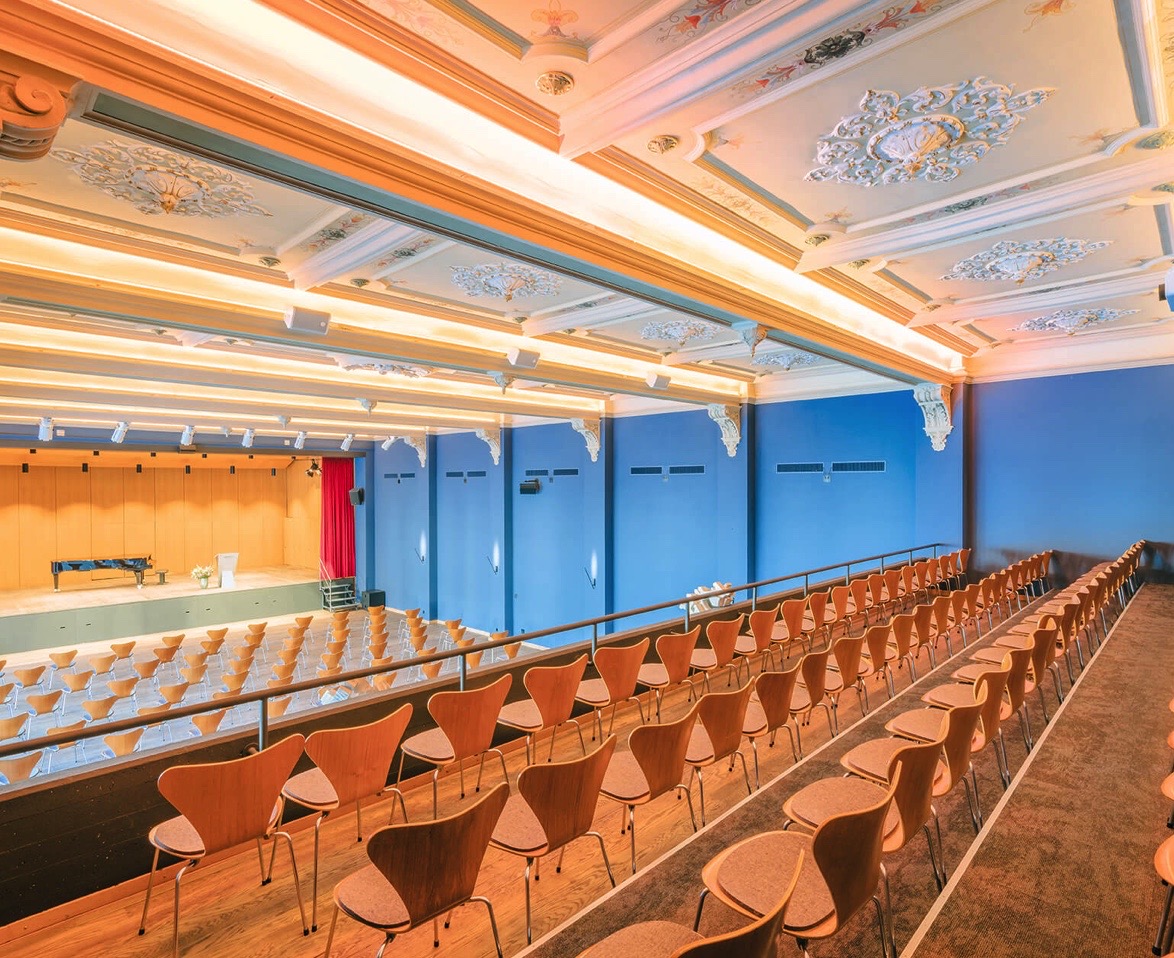
Brigitte & Henri B. Meier Concert Hall

Conference Venue

Brigitte & Henri B. Meier Concert Hall

The 1st Altitude Summit will take place in St. Moritz at Hotel Laudinella, in the heart of the Engadin Alps. A unique setting for scientific exchange, collaboration and inspiration.

Hotel Laudinella
Via Tegiatscha 17
7500 St. Moritz
Switzerland

View Location

Organizing Partners

The 1st Altitude Summit is organized by the “Altitude Summit” Association, a non-profit organization dedicated to advancing scientific knowledge, fostering international collaboration and promoting the exchange of expertise in altitude medicine, hypoxia, exercise physiology and human performance.

The event brings together leading academic institutions, sports medicine expertise and alpine innovation in St. Moritz, Switzerland.

The involvement of an organization as a partner of the St. Moritz Altitude Summit does not imply its endorsement of the scientific content, opinions, or conclusions presented on this website or during the conference.

Search